


การพัฒนาผลิตภัณฑ์เบเกอรีโปรตีนสูง: นวัตกรรมการผลิตเพื่อคนยุคใหม่ที่ใส่ใจสุขภาพ
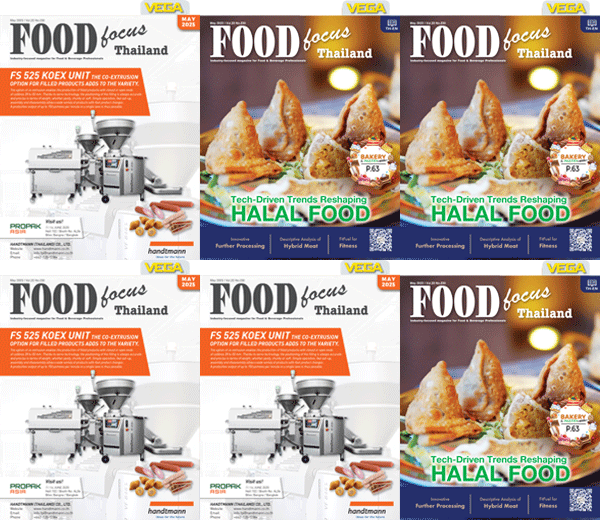

ผลิตภัณฑ์เบเกอรีโปรตีนสูงกำลังได้รับความนิยมจากทั่วโลกอย่างต่อเนื่อง โดยได้รับแรงขับเคลื่อนจากกระแสรักสุขภาพ ไลฟ์สไตล์การใช้ชีวิตที่เร่งรีบ ตลอดจนความต้องการอาหารพร้อมบริโภคที่สะดวกและที่มีคุณค่าทางโภชนาการสูง ดังนั้น ผลิตภัณฑ์เบเกอรีจำพวกขนมปัง มัฟฟิน บราวนี และวาฟเฟิลล้วนได้รับความ
นิยมในการเสริมสารอาหารประเภทโปรตีน
กระบวนการแปรรูปและผลกระทบต่อคุณภาพของผลิตภัณฑ์
1. วิธีการงอกของเมล็ด (Germination) ช่วยกระตุ้นเอนไซม์ภายในเมล็ดธัญพืช เช่น เอนไซม์ อะไมเลสและเอนไซม์โปรตีเอส ซึ่งจะย่อยแป้งเชิงซ้อนและโปรตีน ลดสารต้านโภชนาการอย่างกรดไฟติก และเพิ่มการดูดซึมแร่ธาตุและกรดอะมิโนจำเป็น โดยการเปลี่ยนแปลงเหล่านี้จะช่วยเพิ่มความสามารถในการย่อยโปรตีนและกรดอะมิโน พร้อมให้เนื้อสัมผัสที่มีความนุ่มและรสชาติที่ดีขึ้น
2. การหมักซาวร์โดว์ (Sourdough fermentation) เป็นเทคนิคดั้งเดิมที่ใช้จุลินทรีย์กลุ่มที่สามารถผลิตแลคติก (LAB) และยีสต์เพื่อกระตุ้นการย่อยสลายโปรตีนจนทำให้เกิดกรดและสร้างเอ็กโซพอลิแซ็กคาไรด์ (EPS) ในแป้ง โดยกระบวนการทางจุลินทรีย์เหล่านี้ช่วยเพิ่มความสามารถในการละลายของโปรตีน ปรับโครงสร้างของกลูเตน และปรับปรุงคุณสมบัติทางรีโอโลยีของแป้งที่มีโปรตีนสูง
3. กระบวนการเอ็กซ์ทรูชัน (Extrusion) เป็นกระบวนการทางกลที่ใช้แรงเฉือนและความร้อนสูงเพื่อปรับเปลี่ยนโครงสร้างของโปรตีนและแป้งผ่านการเกิดเจลาติไนซ์ การเสียสภาพทางธรรมชาติของโปรตีน และปฏิกิริยาเมลลาร์ด โดยเทคนิคนี้สามารถผลิตโปรตีนจากพืชที่ให้เนื้อสัมผัส (TVP) และโปรตีนแผ่นเพื่อนำกลับมาเสริมในผลิตภัณฑ์เบเกอรีเพื่อช่วยเพิ่มปริมาณโปรตีนและสร้างเนื้อสัมผัสใหม่
4. การย่อยโปรตีนด้วยเอนไซม์ (Enzymatic hydrolysis) จะช่วยเพิ่มความสามารถในการละลายน้ำ ความสามารถในการอุ้มน้ำ และความสามารถในการย่อยของโปรตีน ตัวอย่างเช่น เอนไซม์ทรานส์กลูตามิเนส สามารถสร้างพันธะโควาเลนต์ระหว่างโมเลกุลโปรตีน ซึ่งส่งผลให้โครงสร้างแป้งมีความแข็งแรงมากขึ้นในระบบที่ไม่มีหรือมีปริมาณกลูเตนน้อยและในระบบที่มีโปรตีนสูง
5. การแปรรูปด้วยความดันสูง (High-Pressure Processing; HPP) เป็นวิธีที่สามารถคลายโครงสร้างของโปรตีนได้โดยที่ไม่ต้องใช้ความร้อน จึงช่วยเพิ่มความสามารถในการอุ้มน้ำและปรับปรุงคุณสมบัติเชิงหน้าที่ โดยไม่ส่งผลกระทบต่อรสชาติหรือสีของผลิตภัณฑ์
6. เทคนิคอัลตราซาวนด์และไมโครเวฟ (Ultrasound and microwave-assisted techniques) เป็นแนวทางใหม่ที่ช่วยส่งเสริมปฏิสัมพันธ์ระหว่างโปรตีนและแป้ง ลดระยะเวลาในการผสม และเพิ่มความสม่ำเสมอของแป้งโด
By.
Asst. Prof. Pavalee Chompoorat Tridtitanakiat, Ph.D.
Division of Product Development Technology
Faculty of Agro-Industry
Chiang Mai University
pavalee.t@cmu.ac.th
The popularity of high-protein bakery products is steadily growing worldwide, driven by a global shift toward health-conscious eating, active lifestyles, and the demand for nutrient-dense, convenient foods. Products such as bread, muffins, brownies, and waffles have become popular formats for protein enrichment.
Processing Methods and their Impact on Product Quality
1. Germination activates endogenous enzymes in cereal grains, such as amylases and proteases, which hydrolyze complex starches and proteins, reduce antinutritional compounds like phytic acid, and increase the bioavailability of essential minerals and amino acids. These changes improve the protein digestibility-corrected amino acid score (PDCAAS) of bakery products, while also contributing to softer crumb texture and enhanced flavor.
2. Sourdough fermentation, a time-honored technique, relies on the metabolic activity of lactic acid bacteria (LAB) and yeast to initiate proteolysis, acidification, and exopolysaccharide (EPS) formation in the dough. These microbial processes enhance protein solubility, modify gluten structure, and improve the rheological properties of high-protein dough systems.
3. Extrusion, a high-shear thermomechanical process, alters the physicochemical structure of proteins and starches through gelatinization, denaturation, and Maillard reactions. This technique enables the development of texturized vegetable proteins (TVP) and protein crisps, which can be reintegrated into bakery matrices to elevate protein content and introduce novel textures.
4. Enzymatic hydrolysis of proteins, for instance, increases solubility, water-binding capacity, and digestibility. Enzymes such as transglutaminase can induce covalent cross-linking between protein molecules, enhancing network strength in gluten-free and high-protein dough systems.
5. High-pressure processing (HPP) is being explored for its ability to unfold protein structures without the use of heat, enhancing hydration and functional performance without compromising flavor or color.
6.Ultrasound and microwave-assisted techniques offer additional avenues by promoting protein-starch interactions, reducing mixing time, and improving dough homogeneity.