11
July 2013
Supplement
ในแต
ละป
จะมี
นมและผลิ
ตภั
ณฑ
นมใหม
ๆ
ออกสู
ตลาดถึ
ง
300 ผลิ
ตภั
ณฑ
โดยผลิ
ตภั
ณฑ
ยอดนิ
ยม คื
อ โยเกิ
ร
ตโพรไบโอติ
ก และ
โยเกิ
ร
ตพร
อมดื่
ม ผู
ผลิ
ตรายสำคั
ญ ได
แก
Nordmilch Group, Molkerei
Alois Muller GmbH, Nestle และ Danone เป
นต
น
เครื่
องดื่
มฟ
งก
ชั
นนอลส
วนมากเป
นการนำสารอาหารมาใส
เข
าไป
ซึ่
งกระบวนดั
งกล
าวถื
อเป
นป
จจั
ยหลั
กในการพั
ฒนาและเป
นโอกาส
ของตลาดนี้
ผลิ
ตภั
ณฑ
ยอดนิ
ยม คื
อ เครื่
องดื่
มให
พลั
งงาน เครื่
องดื่
ม
สำหรั
บผู
ออกกำลั
งกาย ซึ่
งส
วนใหญ
เป
นแบรนด
จากบริ
ษั
ทข
ามชาติ
เช
น
Coca-Cola, PepsiCo และ Red Bull นอกจากนี้
น้
ำผลไม
ผสมวิ
ตามิ
น
และน้
ำผสมวิ
ตามิ
น ก็
ได
รั
บความนิ
ยมเช
นกั
น
เยอรมนี
มี
การพั
ฒนาผลิ
ตภั
ณฑ
อาหารฟ
งก
ชั
นนอลอยู
ตลอดเวลา
โดยอยู
บนพื้
นฐานการวิ
จั
ยและพั
ฒนาเป
นสำคั
ญ ดั
งจะเห็
นได
จาก
จำนวนสิ
ทธิ
บั
ตรและบทความวิ
ชาการ (Scientific publication)
ระดั
บนานาชาติ
ด
านผลิ
ตภั
ณฑ
อาหารฟ
งก
ชั
นนอลของเยอรมนี
ที่
เพิ่
มขึ้
น
อย
างต
อเนื่
อง เยอรมนี
ได
รั
บการยอมรั
บจากทั่
วโลกว
าเป
นประเทศ
ที่
มี
การพั
ฒนาผลิ
ตภั
ณฑ
อาหารฟ
งก
ชั
นนอลประเภทขนมหวาน ซี
เรี
ยล
และเบเกอรี่
มากที่
สุ
ดในโลก และประสบความสำเร็
จมากที่
สุ
ดในโลก
ด
วย ป
จจุ
บั
นด
วยภาวะเศรษฐกิ
จที่
ถดถอยทำให
ผลิ
ตภั
ณฑ
อาหาร-
ฟ
งก
ชั
นนอลที่
เป
นแบรนด
ของห
างค
าปลี
ก (Private label) ได
รั
บ
ความนิ
ยมเพิ่
มมากขึ้
น ทั
ศนคติ
ของชาวเยอรมนี
จำนวน 2 ใน 3 ของ
จำนวนผู
บริ
โภคทั้
งหมดมองว
าสิ
นค
าภายใต
แบรนด
ของห
างค
าปลี
ก
มี
ความเที
ยบเท
ากั
บแบรนด
อื่
นๆ ทำให
ยอดขายสิ
นค
าแบรนด
ของห
างค
าปลี
ก
เพิ่
มขึ้
นอย
างต
อเนื่
อง
Major manufacturers are Nordmilch Group, Molkerei Alois Muller
GmbH, Nestle, Danone, etc.
The nutrients are added to most functional drinks. This
process is considered as a key factor in the development and the
opportunities of this market. Popular products are energy drinks
and drinks for physical exercise player groups. Most of the brands
are multinational companies like Coca-Cola, PepsiCo and Red
Bull. In addition, vitamin enriched juices and vitamin enriched water
become popular as well.
Germany continually develops functional food products which
are based on the research and development issues. It is evidenced
with the increase in number of international food product patents
and scientific publication in Germany. Germany is recognized
worldwide as the top rank functional food products developer
of sweets, cereals and bakery in the world and she is the most
successful business player worldwide. With the current economic
downturn in the country, the functional food products of private
labels are increasingly popular. The attitude of two-third of German
consumers is that, private label products are equivalent to other
functional product brands. Therefore, sales of private label products
are increased steadily.
The functional food product development also meets needs
of niche group. That is, the 18-34 year age group, with the
hustle and lifestyle that loves low price products is suitable for
easy consumption and low cost commodities. At the same time,
customers aged 45 years and above will focus on high value-added
products or higher price as such group has high purchasing power
and focuses on quality rather than price. However, measurement
of the products that are accepted by the markets or not after the
product launch will require 12-18 months.
• Price
Functional food product selling price can increase by up to 100%
of normal food prices. However, selling prices vary according to the
product characteristics. But, they are generally still more expensive
than normal food prices.
‡¬Õ√¡π’
໓
πμ≈“¥Õ“À“√
∑’Ë
„À≠à
∑’Ë
ÿ
¥„π À¿“æ¬ÿ
‚√ª
¥â
«¬¡’
ºŸâ
∫√‘
‚¿§¡“°°«à
“ 82 ≈â
“π§π
à
ߺ≈„Àâ
„π·μà
≈–ªï
¡’
°“√„™â
®à
“¬
¥â
“πÕ“À“√¢Õߪ√–‡∑»§‘
¥‡ªì
π
É
Õ¬≈– 15 ¢Õߧà
“„™â
®à
“¬∑—È
ßÀ¡¥
™“«‡¬Õ√¡π’
¡’
§«“¡Õà
Õπ‰À«¥â
“π√“§“ ‚¥¬ à
«π¡“°π‘
¬¡¢Õß√“§“∂Ÿ
° Õ¬à
“߉√°Á
μ“¡ „π°“√μ—
¥ ‘
π„®´◊È
Õ
™“«‡¬Õ√¡π’
„Àâ
§«“¡ ”§—
≠°—
∫ªí
®®—
¬Õ◊Ë
πÊ Õ“∑‘
§ÿ
≥¿“æé ·≈– °“√∫√‘
°“√é ‡∑à
“Ê °—
∫‡√◊Ë
ÕߢÕß√“§“
The Germans are sensitive to price. They prefer low price products. However, decision on
purchase of people in Germany also emphasizes on other factors such as qualityé and
serviceé.
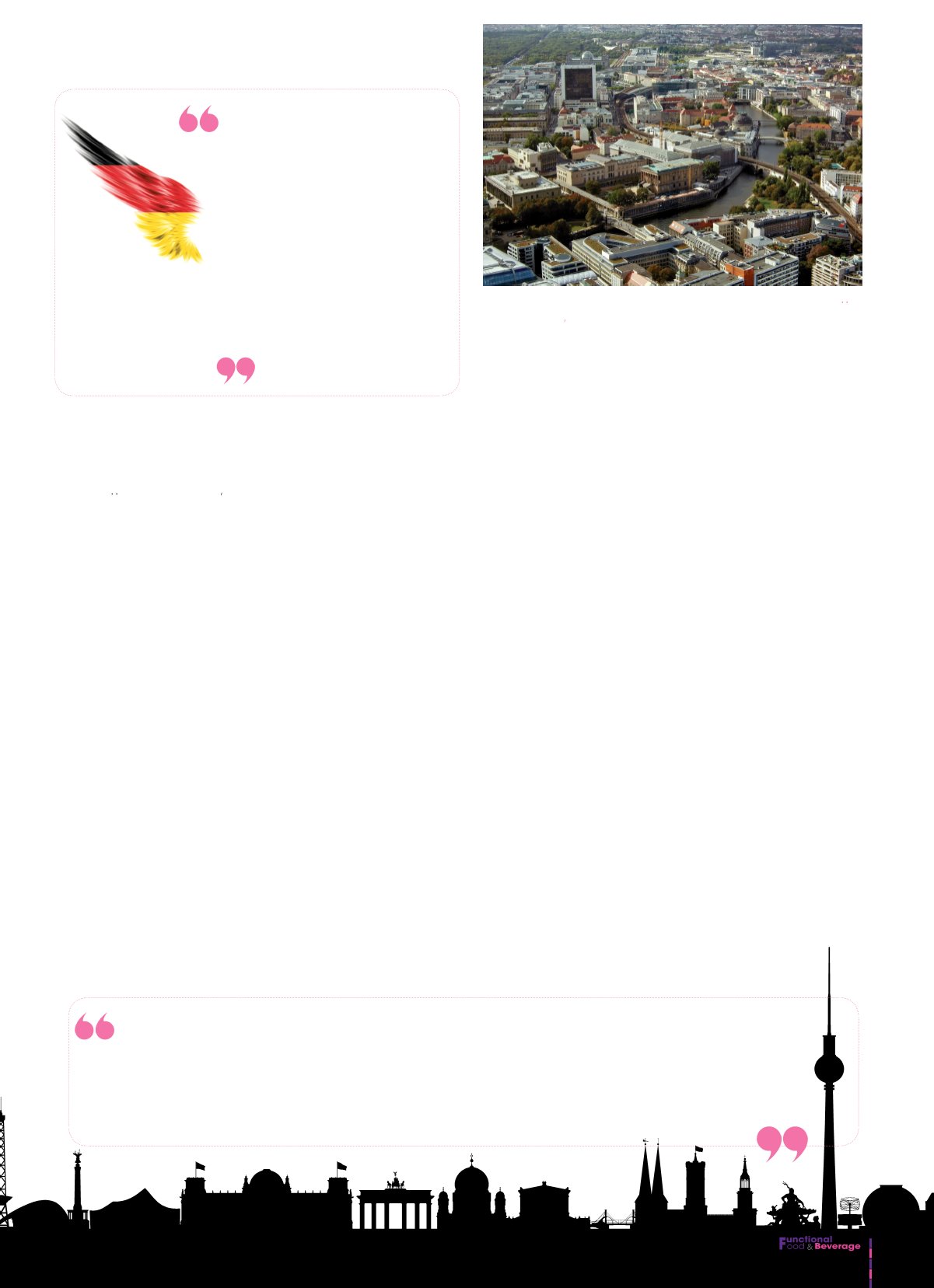
Germany is the largest food market in the EU with
more than 82 million consumers. As a result, parts of
expenses in the country of each year are spent on
food significantly, accounting for 15% of the total
national expenses.
ç
ç
ç
ç


