Food Focus Thailand
NOVEMBER 2013
32
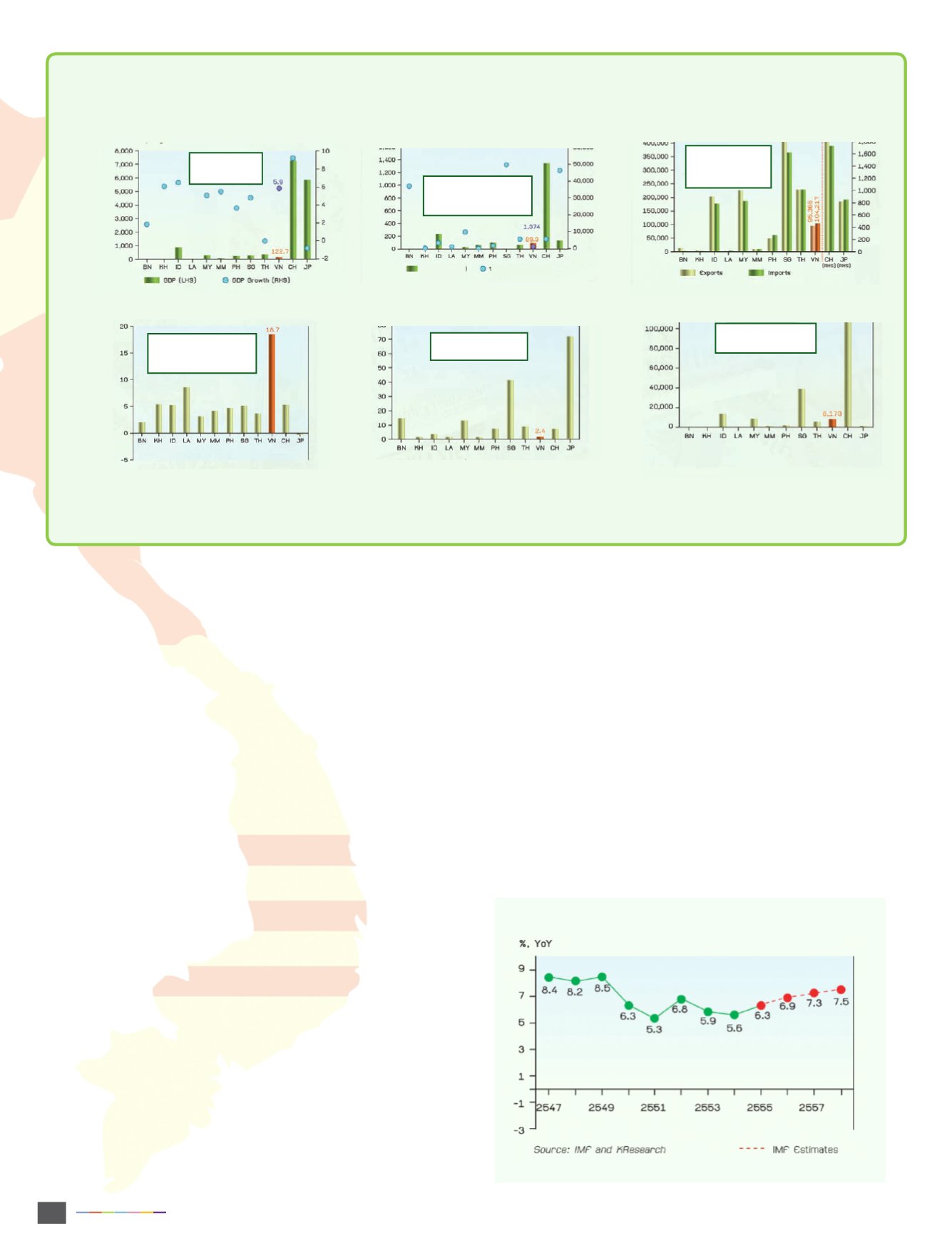
Vietnam’s Economic Growth Rate (2004-2015)
Economic Trends in 2013
In 2012, Vietnam’s economy has a better direction than those of the
beginning of the year. It is result of the more relaxed monetary policies
and measures adopted by the government to stimulate the economy;
it will likely to result better in the year end including increasing costs
for domestic consumption due to inflation that declines continuously.
However, Vietnam has faced an inevitable slowdown in the export
sector from fluctuations in the global economy. This would essentially
result in widespread of current account deficits in both 2012 and 2013.
In addition, injecting money into the banking system for restructuring
and enterprise reform will result in rather restricted public spending
and investments in other projects. Taking account of the above
factors, it had been forecast that Vietnam’s economic growth would
slow down to 5.6% in 2012 and grow up to 6.3% in 2013. Although
Vietnam aims to reduce inflation down to less than 10% by 2012,
the price of oil and energy in the country is also a major factor that
causes inflation to rise in 2013.
เครื่
องชี้
เศรษฐกิ
จที่
สำคั
ญ / Key Economic Indicators
National Income and GDP Growth Rate
GDP 2012-2015
6.5% by average
billion USD
%
%
Inflation Rate
USD/Day
Labor Wages
Note: China’s labor wage is the average from 17 economic cities
million
USD
Population and Per Capita Income
Vietnam is counted as
Lower-Middle income
country
The highest inflation rate
in the region
Low Labor Wage
Country
Population
Per Capita Income
million USD
billion USD
Import and Export Value
The ratio of export
is about 67.1%
of GDP
Foreign Investment Fund (2010)
million USD
ที่
มา:
ศู
นย
วิ
จั
ยกสิ
กรไทย รวบรวมและคาดการณ
โดยข
อมู
ลจากหน
วยงานสถิ
ติ
ของแต
ละประเทศ ASEAN Secretariat, IMF, UNCTAD (ข
อมู
ลป
2554 ยกเว
นระบุ
)
Source:
Kasikorn Research Center, Statistic Dept. of each country, ASEAN Secretariat, IMF, UNCTAD (2011 Data is not included)
Japan is a major
investror.
ป
ญหาอั
ตราหนี้
เสี
ยของธนาคารกลางเวี
ยดนาม ในส
วนของเงิ
นลงทุ
น
จากต
างประเทศใน 5 เดื
อนแรกลดลงร
อยละ 0.2 เที
ยบกั
บช
วงเดี
ยวกั
น
ของป
ก
อน โดยมี
มู
ลค
า 4.51 พั
นล
านเหรี
ยญสหรั
ฐฯ
แนวโน
มเศรษฐกิ
จป
2556
ในป
2555 เศรษฐกิ
จของเวี
ยดนามมี
ทิ
ศทางที่
ดี
ขึ้
นกว
าช
วงต
นป
ที่
ผ
านมา อั
นเป
นผลจากนโยบายทางการเงิ
นที่
ผ
อนคลายมากขึ้
นและ
มาตรการที่
รั
ฐบาลนำมาใช
เพื่
อกระตุ
นเศรษฐกิ
จน
าจะส
งผลให
เห็
นชั
ดขึ้
น
ในช
วงปลายป
รวมทั้
งค
าใช
จ
ายเพื่
อการบริ
โภคภายในประเทศที่
มี
ปริ
มาณ
เพิ่
มขึ้
น อั
นเนื่
องมาจากอั
ตราเงิ
นเฟ
อที่
ลดลงอย
างต
อเนื่
อง อย
างไรก็
ตาม
เวี
ยดนามต
องเผชิ
ญกั
บการชะลอตั
วของภาคการส
งออก จากความ
ผั
นผวนของเศรษฐกิ
จทั่
วโลกอย
างหลี
กเลี่
ยงไม
ได
ซึ่
งจะส
งผลให
ยั
งคง
ขาดดุ
ลบั
ญชี
เงิ
นสะพั
ดทั้
งในป
2555 และ 2556 นอกจากนี้
การอั
ดฉี
ด
เงิ
นสนั
บสนุ
นเพื่
อการปรั
บโครงสร
างหนี้
ในระบบธนาคารพาณิ
ชย
และ
ปฏิ
รู
ปรั
ฐวิ
สาหกิ
จ
ส
งผลให
การใช
จ
ายและการลงทุ
นของภาครั
ฐ
ในโครงการอื่
นๆ มี
มู
ลค
าไม
สู
งมากนั
ก จากป
จจั
ยข
างต
นทำให
มี
การ
คาดการณ
ว
าเศรษฐกิ
จของเวี
ยดนามจะขยายตั
วชะลอลงมาที่
ประมาณ
ร
อยละ 5.6 ในป
2555 และขยายตั
วดี
ขึ้
นที่
ร
อยละ 6.3 ในป
2556
แม
เวี
ยดนามตั้
งเป
าจะลดอั
ตราเงิ
นเฟ
อลงมาที่
ต่
ำกว
าร
อยละ 10 ภายใน
ป
2555 แต
ราคาน้
ำมั
นและพลั
งงานภายในประเทศยั
งเป
นป
จจั
ยหลั
ก
ที่
ทำให
อั
ตราเงิ
นเฟ
อเพิ่
มสู
งขึ้
นในป
2556


